SCiMMA
Scalable Cyberinfrastructure to support Multi-Messenger AstrophysicsThe SCiMMA Rubin Crossmatch Service takes the stream of transient alerts from the Vera C. Rubin Observatory, crossmatches each alert's sky position against reference astronomical catalogs, and publishes the matches to the public astronomy community.
About SCiMMA
The Scalable Cyberinfrastructure to support Multi‑Messenger Astrophysics (SCiMMA) project partners with the MMA community to identify scientific needs and to develop the cyberinfrastructure required to meet them. SCiMMA’s work is grounded in collaboration among astronomers, computer scientists, and data scientists, ensuring that solutions are both scientifically informed and technically robust. SCiMMA supports community coordination through the OpenMMA forum, an open platform for sharing information, discussing challenges, and aligning efforts across the field.
'Messaging to support MMA: Multi‑Messenger Astrophysics relies on rapid response to transient events: the community must be able to analyze data quickly, assemble relevant historical observations, identify available instruments for follow‑up, initiate observations, and manage competing priorities across collaborations. These activities demand reliable, interoperable messaging cyberinfrastructure, which can be configured to inform the public, or restricted to authorized parties.
SCiMMA offers two services to connect to real-time messaging. A group of practicing scientists, interested in receiving alerts, scheduling follow-ups, follow up data, and messaging in real time, might first look at the quick start with HERMES . HERMES has an API, an intuitive browser interface and integration to other tools, such as the treasure map.A facility or group up interested in automated operations, and communications using an open or private publish - subscribe and archiving capability, might quickstart with HOPSKOTCH . Ligo-Virgo-kagra (LVK) uses SCiMMA Hopskotch internally for connecting its internal systems. SciMMA collaborated with LVK and the Rubin Observatory to publish LVK Target Opportunity Candidates for potential Rubin Observations.
Data Data Services to support MMA: SCiMMA provides data services that assemble diverse datasets, giving researchers rapid access to contextual and historical information needed for timely understanding of new events. SCiMMA offers production‑level support for services developed within the community, helping ensure that community‑driven tools can operate reliably, scale effectively, and remain available during critical observing periods. Scimma Offers tools such such Blast, AstroDash, Heroic and Stamps.
Open MMA
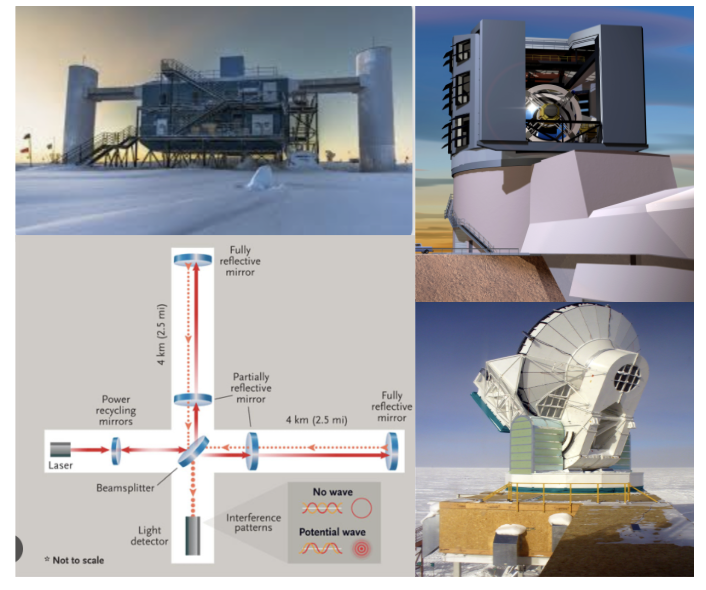
OpenMMA is a community forum for discussion of multi-messenger astrophysics(MMA). Topics include latest scientific results, the status of the ongoing and upcoming observatories and experiments (including the LIGO-VIRGO-Kagra (LVK) Gravitational Wave network, IceCube, SNEWS, AMON, ground-based observatories, spacecraft etc), the infrastructure to connect these facilities, and any other issues pertinent to the detection and characterization of MMA sources. OpenMMA replaces and broadens the scope of the OpenLVEM forum.
LVK04 - Summary of the LVK 04 run and preparations for an LVK science run in 2026.
LVK published alerts on the igwn.gwalert, igwn.gwistat.H1.range_history, igwn.gwistat.L1.range_history, igwn.gwistat.K1.range_history topics.SCIMMA has archived LVK alerts from run04. igwn.gwalert is available through HERMES. All public topics are available via API calls to the SCiMMA Archive server. You don't need to authenticate or have a SCiMMA account to access archived public_topics.
SCiMMA anticipates publication of new alerts in the upcoming science run. SCiMMA also continues to support LVK's use of private topics during the upgrade period and through the upcoming science run as LVK systems are evolved and produce discoveries in the upcoming run.SciMMA collaborated with LVK and the Rubin Observatory to commission publishing LVK Target Opportunity Candidates for potential Rubin Observations using HopSkotch.
Hopskotch
Hopskotch is a service providing a publish-subscribe and archive capability for Multi-Messenger Astronomy. The pub-sub system is based on the Apache Kafka software. Accounts allowing a person to access the Hopskotch service are freely available to the community. Anyone with an account, which can be simply created from your institutional or google login: here to get credentials, subscribe to public topics, and apply for access to private topics. Messages are held within Kafka for 30 days. Messages may be optionally archived for long term retention. A Large Message Offload Extension supports messages larger than those normally supported by Kafka, for example, messages containing spectra. Hopskotch carries messages of an arbitrary format
HERMES
The Hopskotch-Enabled Realtime Message Exchange Service (HERMES) is designed as a web interface to Kafka streams for time domain and multi-messenger astronomy. The page offers both a graphical front end and an API for interacting with the streams, eliminating the need to install software to set up Kafka connections locally. Hermes allows the community to view messages from diverse sources, including Hopskotch, GCN, and TNS. HERMES also provides a minimal format for common message types, such as reporting photometry and spectroscopy, so the messages can be automatically parsed and ingested into other systems, e.g., Target of Opportunity Managers(TOMs).
SCiMMA Crossmatch Service
The SCiMMA Rubin Crossmatch Service takes the stream of transient alerts from the Vera C. Rubin Observatory, crossmatches each alert's sky position against reference astronomical catalogs, and publishes the matches to the public astronomy community. Each incoming alert is filtered for reliability, batched, and matched against survey catalogs on a remote Dask cluster using LSDB. The resulting per-match records are published over SCiMMA Hopskotch and are also queryable through a REST API.

BLAST
Blast[*] is a public web application built to provide information in real-time for every new transient reported to the International Astronomical Union (IAU). 1) determine the transient's host galaxy, 2) identify the available archival data, 3) measure the resulting host galaxy star formation rates, masses, and stellar ages.
[*] D.O. JOnes et a, Blast: a Web Application for Characterizing the Host Galaxies of Astrophysical Transients arXiv:2410.17322 .
HEROIC
The Hop-Enabled Real-time Observatory Information and Coordination (HEROIC) is a new SCiMMA-led project to help coordinate Target of Opportunity observations between different groups. HEROIC's core features include:* Display the status (current and planned) of major national facilities for follow-up in one place, both current and planned.
* Quickly filter to facilities of interest/to which user has access.
*Connect to Target and Observation Manager (TOM) Toolkit to make it simple to submit observing requests.
The HEROIC project is a collaboration between researchers and programmers at the University of Illinois, Urbana-Champaign, NSF's NOIRLab and the Las Cumbres Observatory.

DASH/ASTRODASH
DASH (Deep Automated Supernova and Host classifier), a novel software package that automates the classification of the type, age, redshift, and host galaxy of supernova spectra. DASH makes use of a new approach that does not rely on iterative template-matching techniques like all previous software, but instead classifies based on the learned features of each supernova’s type and age. It has achieved this by employing a deep convolutional neural network to train a matching algorithm. This approach has enabled DASH to be orders of magnitude faster than previous tools, being able to accurately classify hundreds or thousands of objects within seconds[*].
SCiMMA is working with the asrodash project to supply a production-stable instance of the DASH service.
Cutouts
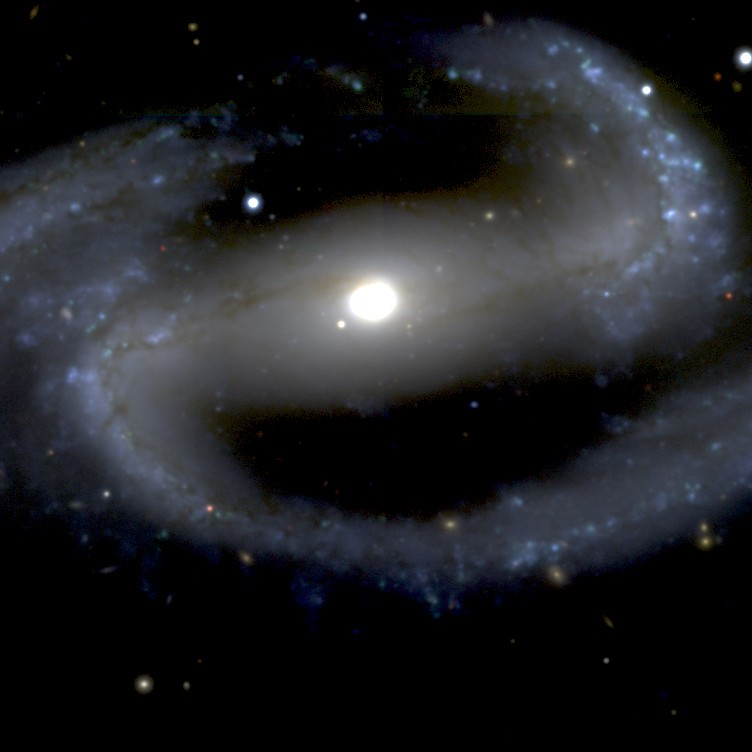
This service allows researchers to generate cutouts from image files based on RA/DEC coordinates and areal dimensions about those coordinates. The available images are sourced from a growing list of astrophysical survey datasets, including the Dark Energy Survey.Scimma is working with the to supply a production-stable instance of the Cutout service.